Anik Biswas — Artificial intelligence and healthcare researcher Anik Biswas participated in the Youth and AI Summit at the United Nations
New York:: Anik Biswas — Artificial intelligence and healthcare researcher Anik Biswas participated in the Youth and AI Summit at the United Nations Headquarters in New York, engaging with discussions on responsible artificial intelligence, emerging technologies, and the role of young researchers in addressing societal challenges.
Biswas’s research centers on a growing challenge in digital healthcare: how artificial intelligence can support earlier and more informed disease detection while preserving the privacy and security of sensitive health information.
His work explores AI and machine-learning approaches for healthcare applications, including early detection of breast cancer and type 2 diabetes, alongside broader research interests in privacy-preserving AI, secure healthcare data analytics, and clinical decision support.
As healthcare organizations increasingly adopt data-driven technologies, the responsible use of patient information remains an important consideration. Biswas aims to contribute to AI systems that balance technological capability with privacy, security, transparency, and trust.
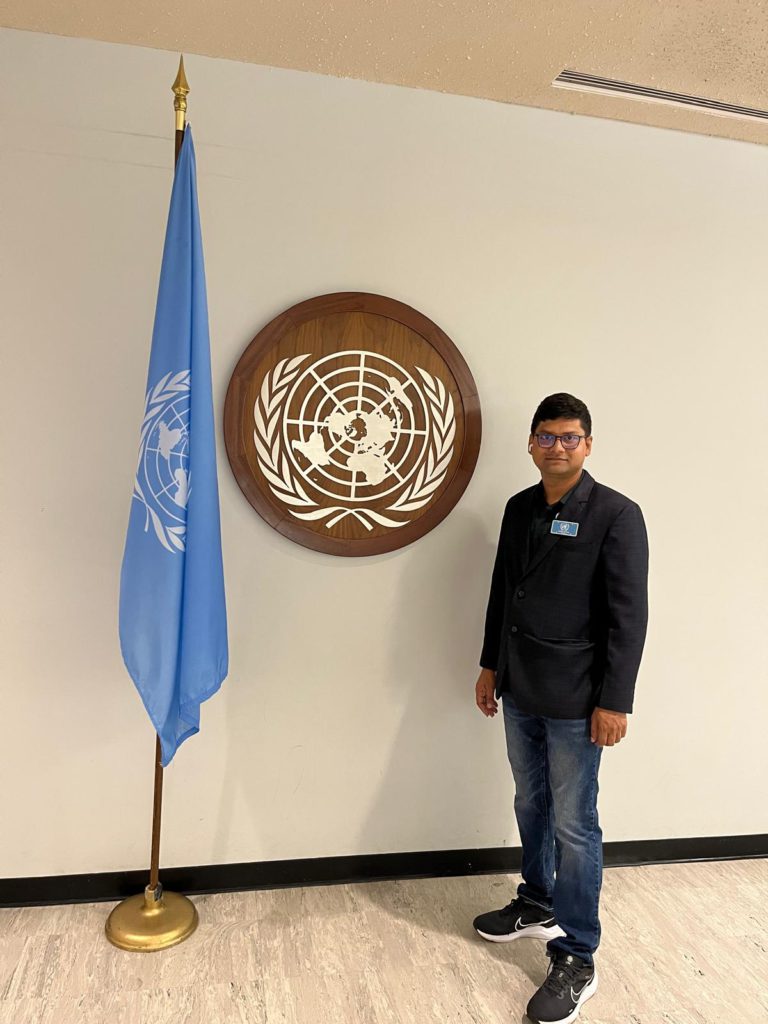
“AI has significant potential to improve healthcare, but progress should not come at the expense of patient privacy or public trust,” Biswas said. “My goal is to contribute to responsible AI technologies that can help identify health risks earlier, support healthcare professionals in making informed decisions, and make digital healthcare safer and more trustworthy.”
Following the summit, Biswas plans to continue developing his research in the United States around responsible and privacy-preserving AI for healthcare, with an emphasis on early disease detection and secure clinical decision-support technologies.
His research direction addresses issues with broader relevance to the United States, where improving healthcare efficiency, strengthening the responsible use of health data, and developing trustworthy artificial intelligence are increasingly important areas of technological innovation.

Biswas also hopes to encourage greater collaboration among researchers, healthcare professionals, technology experts, and young innovators. Such interdisciplinary cooperation can help translate advances in artificial intelligence into practical healthcare solutions while ensuring that privacy and responsible technology development remain central considerations.
Participation in the Youth and AI Summit provided Biswas with an opportunity to connect his research interests with wider conversations about the responsible future of artificial intelligence.
For Biswas, that future is ultimately human-centered: using AI not simply to make healthcare more intelligent, but to make it earlier, safer, more secure, and more trustworthy for the people it is designed to serve.