

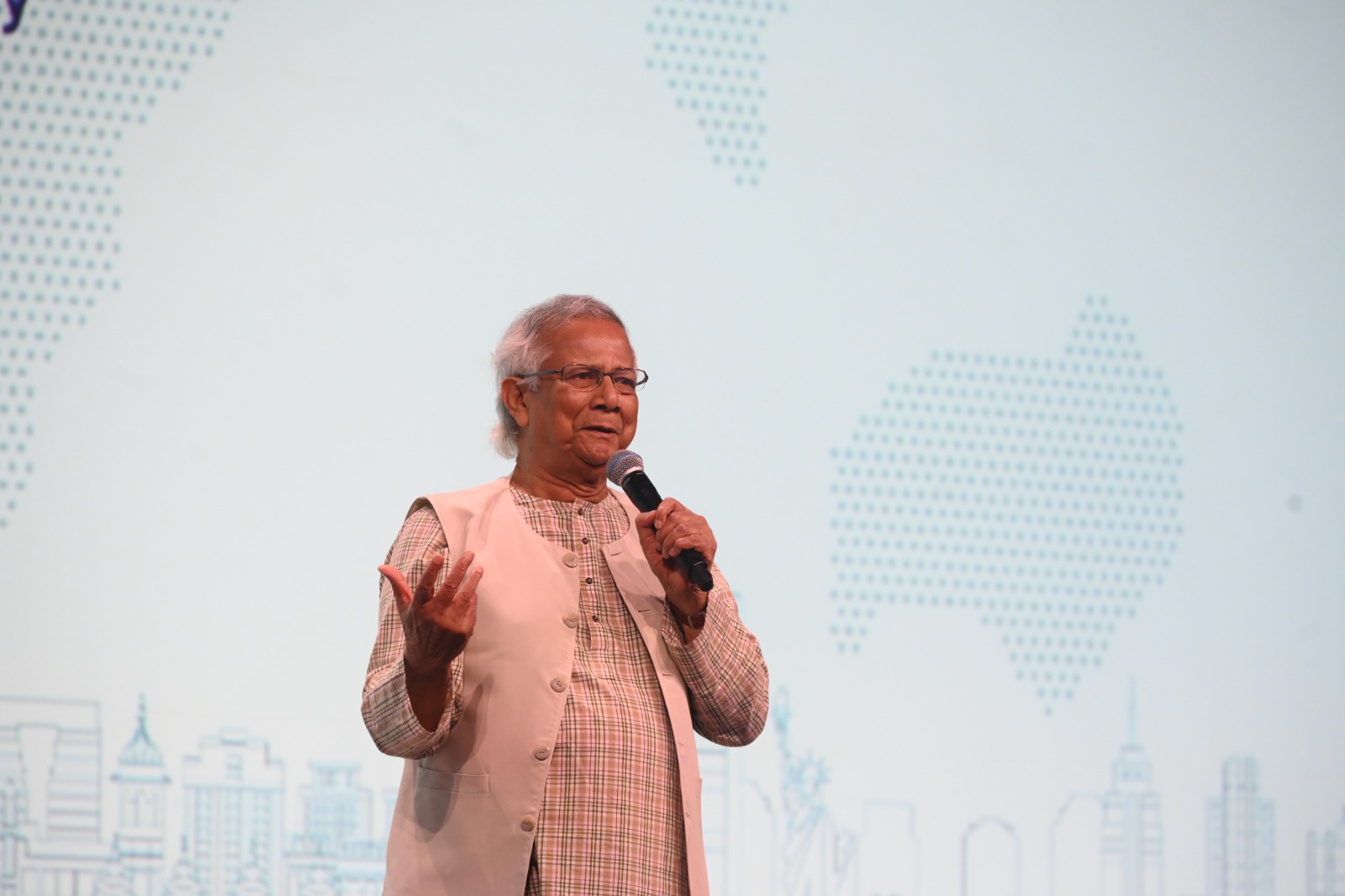

Recent commentary has raised concerns that the Interim Government and the Chief Adviser Professor Muhammad Yunus’s open support for a “Yes” vote in Bangladesh’s forthcoming referendum on institutional reforms may be inconsistent with the expectations of an interim administration. These concerns deserve respectful consideration. However, when assessed in light of Bangladesh’s specific political context, the mandate of the interim government, and comparative international practice, such criticism does not withstand close scrutiny.
In Bangladesh’s current transitional moment, silence would not represent neutrality, it would represent a failure of leadership.
1. The Interim Government’s Mandate Is Reform, Not Procedural Minimalism
Bangladesh’s interim government was not constituted merely to administer routine state functions or to act as a passive electoral caretaker. It emerged from an acute governance and legitimacy crisis, marked by sustained public protest, institutional breakdown, and a collapse of confidence in political processes. Its mandate—understood domestically and communicated clearly to international partners—has been to stabilize the state, restore democratic credibility, and deliver a credible framework of reforms before returning authority to an elected government.
Professor Yunus, as Chief Adviser, has spent the past eighteen months leading an unprecedented process of consultation across political parties, civil society, professional groups, and youth constituencies. The reform package now before the electorate is the product of that process. To suggest that he should now refrain from advocating for these reforms is to misunderstand the very purpose of the interim arrangement.
An interim authority entrusted with reform cannot plausibly be expected to disown that reform at the moment of democratic decision.
2. Advocacy Is Compatible with Democratic Choice
International democratic practice does not require heads of government—interim or otherwise—to adopt a posture of studied indifference toward major constitutional or institutional change. On the contrary, democratic systems routinely expect leaders to argue publicly for the policies and reforms they believe serve the national interest, while leaving the final decision to voters.
As in many other countries, referendums in Bangladesh are not designed to be technocratic exercises. They are meant to facilitate direct popular judgment. That judgment is strengthened when voters are presented with clear arguments from those responsible for governing.
What matters for democratic legitimacy is not whether leaders take a position, but whether:
• Voters are free to reject that position
• Opposition voices can campaign openly
• The process is transparent and credible
Those conditions remain intact.
3. Leadership Is Crucial at This Moment in Bangladesh
Bangladesh’s reform referendum is not an abstract policy choice. It is a response to concrete and well-documented governance failures that have concerned both citizens and international partners for years: weakened institutions, contested electoral mechanisms, and politicization of oversight bodies.
In this context, the Chief Adviser’s support for reform reflects continuity and accountability. Having led the effort to diagnose institutional weaknesses and broker consensus around remedies, it would be incoherent and destabilizing for him to now retreat into silence.
For an interim leader whose legitimacy derives from reform, advocacy is not partisan behavior; it is institutional responsibility.
4. International Precedent Supports This Approach
Bangladesh is not an outlier in this respect. International partners will recognize that heads of government have frequently campaigned openly for referendums tied to major national transitions, whether in Europe, Eurasia, or beyond. These cases are widely understood as expressions of political leadership, not violations of democratic norms.
Modern history offers abundant precedent:
• United Kingdom (2016): Prime Minister David Cameron vigorously campaigned for a “Remain” vote in the Brexit referendum, using the full weight of his office to argue that continued EU membership was in the national interest.
• Scotland (2014): First Minister Alex Salmond was the public face of the “Yes Scotland” independence campaign, framing the referendum as a democratic choice about the country’s future.
• Turkey (2017): President Recep Tayyip Erdoğan led nationwide rallies in support of constitutional changes expanding executive power.
• Kyrgyzstan (2016): President Almazbek Atambayev publicly urged voters to approve constitutional reforms strengthening parliamentary governance.
• France (1962): President Charles de Gaulle openly championed a referendum to fundamentally alter the method of presidential election, bypassing parliamentary resistance in favor of direct popular sovereignty.
In none of these cases was advocacy by a sitting head of government deemed inherently undemocratic. On the contrary, such advocacy was understood as an expression of political accountability: leaders argue for what they believe is right and accept the people’s verdict.
The legitimacy of a referendum rests not on leaders’ silence, but on the freedom of voters to agree or disagree.
What distinguishes Bangladesh’s situation is that the interim government has no electoral stake in the outcome. Professor Yunus and his advisers are not seeking extended tenure, personal political advantage, or partisan gain. Their role is time-bound and explicitly transitional. The reforms, once adopted or rejected, will be inherited by an elected government.
This sharply limits the risk of undue influence and underscores the good-faith nature of the advocacy.
5. Government Outreach is Not Coercion
Concerns regarding advisers campaigning across districts must also be placed in context. Outreach efforts organized through district administrations are focused on explaining the substance and implications of the reforms, particularly in areas where misinformation and uncertainty can undermine informed participation.
Such engagement is common in transitional settings and does not, in itself, constitute ethical overreach. The presence of government voices in the public debate does not preclude disagreement; rather, it ensures that citizens are not asked to vote on reforms they do not understand.
6. Conclusion: Democratic Responsibility, Not Ethical Breach
For Bangladesh at this juncture, the greater risk lies not in advocacy, but in equivocation. An interim government that declines to support the reforms it has championed would weaken public confidence, confuse voters, and undermine the coherence of the transition.
Professor Muhammad Yunus’s support for a “Yes” vote is consistent with:
• The reformist mandate of the interim government
• Bangladesh’s urgent need for institutional renewal
• Established international democratic practice
• Transparency and accountability to the electorate
Ultimately, the decision rests with the people of Bangladesh. That is the democratic guarantee. Leadership does not negate that choice. It helps clarify it.