
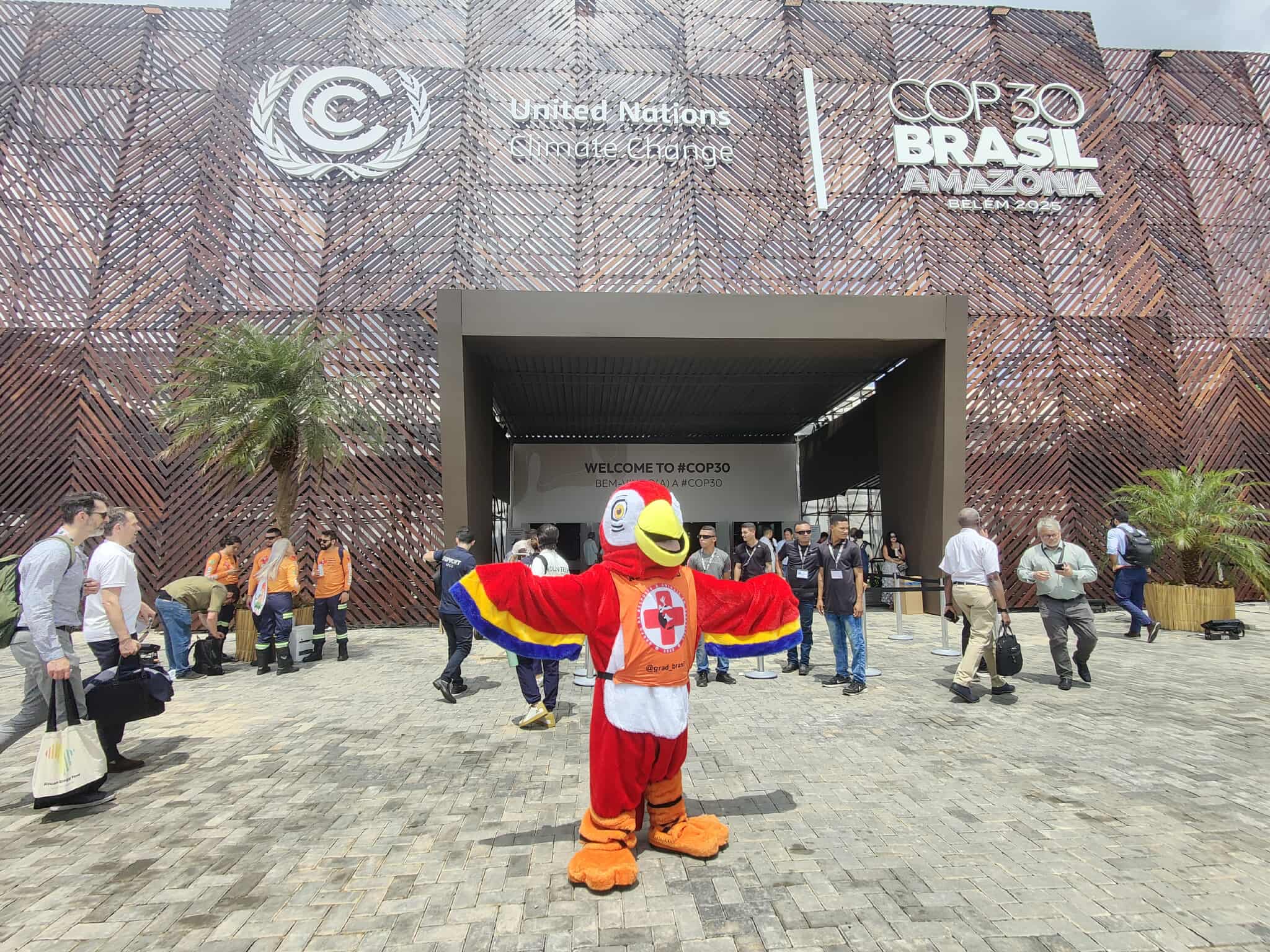


Hasanur Rahman Tanzir – The 30th United Nations Climate Change Conference—COP30—has begun amid a growing climate crisis worldwide.

The two-week-long global conference opened in the Amazon city of Belém, Brazil, on Monday (November 10) at 11 am local time and 8 pm Bangladesh time. Representatives from more than 190 countries, climate and environmental experts, NGOs and media workers joined the event.
However, on the opening day itself, uncertainty arose about the main goals and topics of discussion of the conference. There are strong disagreements among countries around these three issues, especially exiting fossil fuels, financing and adaptation plans.
Although COP30 has begun, it is still unclear what exactly the countries will reach a consensus on. The promise to gradually phase out polluting fuels in 2023 has made very limited progress. The situation has been complicated by the announcement of the new US administration; they will withdraw from the Paris Agreement in January 2026. The European Union has also relaxed its ambitious climate goals amid an energy security crisis, raising questions about whether a new global deal will be possible at this summit.
“My preference is that there is no need for a formal COP decision all the time,” said Brazilian diplomat André Correa do Lago, president of this year’s COP30. “If countries really want to reach a consensus, we will work on that.”
He added, “China has taken on a new role this time—as a solution provider. With affordable green technology, China is now leading the global energy transition. Some say China is exerting economic influence, but in reality it is positive for the climate.”
The day before COP30 began, last Sunday evening, representatives of indigenous peoples from various Latin American countries arrived in Belém by boat. They had traveled about 3,000 kilometers by river, coming from the Amazon Valley, demanding protection of forests and lands.
They say, “We want leaders to take concrete action, not promises. The most devastating impacts of climate change are happening to us—deforestation, oil spills in rivers, illegal mining—all of these are taking away our lives.
They demand that local communities’ opinions and participation be ensured in forest management and land decisions.
Before the start of COP30, more than 300 scientists from Japan, South Africa, Britain and other countries published a joint letter. They warned, “The world’s ice sheets are melting at an alarming rate. This is a major threat not only to the environment but also to global stability. Short-term national interests should not influence the COP30 negotiations.”
Disagreements over agenda approval
The first task of the climate conference is to approve the agenda, which has been the subject of disagreements for months.
COP30 President André Correa do Lago said, “This is a healthy exchange of priorities between countries. But we want it to be fruitful.”
Brazilian President Luiz Inácio Lula da Silva expressed hope that this year’s COP will at least determine a plan to exit fossil fuels.
“How this will be done is still uncertain. That is the biggest mystery of COP30.”
For the first time, the agriculture sector is coming up for discussion
A new aspect of this year’s COP is reducing emissions from the agricultural sector. It has long been neglected in the discussion, because agriculture and livestock production are deeply linked to the food security and economy of many countries. Those concerned say that developing countries are now looking for solutions to reduce emissions by increasing production through agricultural technology and innovation. International support needs to be increased in this sector too.
Developing countries’ anger over inequality in financing: Developing countries complain that the money promised by rich countries for climate adaptation has not yet been implemented.
Many countries, including Brazil, say that development banks should be reformed to attract private investment, so that financial flows to adaptation projects increase. The Brazilian government wants to increase international cooperation, especially to protect the Amazon forest.
106 countries submit new emissions plans:
According to the United Nations, 106 countries have submitted new or updated nationally determined contributions (NDCs) as of Monday morning.
These include new targets for reducing emissions and pledges to invest in renewable energy. It is reported that South Korea, India, Indonesia and several other countries may submit new plans this week. However, a UN analysis has said that even if these plans are implemented, it is not possible to keep global warming below the 1.5 degree Celsius limit.
The way forward is a conflict of hope and uncertainty:
Amid political divisions and climate concerns around the world, many are calling this conference in Belém a ‘conflict of hope and reality.’
Scientists are warning that time is running out, but countries are still surrounded by their own interests.
The question remains – will this COP give rise to any new effective agreement, or will real action be lost in the crowd of promises?
COP30, which began yesterday Monday, will end on November 21. The main issues of this conference are the abandonment of fossil fuels, financing, agricultural emissions and adaptation.
The opening ceremony was held at the Plenary Amazonas Hall of the Hangar Convention and Fair Center of the Amazon in the city of Belém, at the foot of the Amazon rainforest. The opening ceremony was attended by Mukhtar Babayev, President of COP29 and Minister of Environment and Natural Resources of Azerbaijan; André Correa do Lago, President-elect of COP30; and Simon Steele, Executive Secretary of the United Nations Climate Change Commission; and Simon Steele, Executive Secretary of the United Nations Climate Change Commission.
Earlier, the ‘Belém Climate Summit’ of heads of state and government was held on 6 and 7 November as part of the preparatory talks for the main conference. The two-day summit included high-level discussions on strengthening global climate action and reducing emissions.
Representatives from around 190 countries are participating in the COP30 conference, where important decisions are expected to be taken on climate finance, adaptation and the expansion of renewable energy.
The Paris Agreement is already in effect, but climate action in the Amazon needs to be accelerated, UN Climate Change Executive Secretary Simon Steele said on Sunday (Brazilian time) the night before the COP30 conference.
“Natural disasters are already causing great damage – Hurricane Melissa in the Caribbean, super typhoons in Vietnam and the Philippines, and tornadoes in southern Brazil,” he said.
Steele outlined three key goals that must be achieved at COP30. They are: clarifying the commitments of all countries, such as: all are committed to climate cooperation; accelerating implementation, such as: taking rapid action in all sectors of the economy; and connecting people’s lives, such as: ensuring that climate action brings benefits to everyone’s lives – such as job creation, reduced pollution, improved health and secure, affordable energy.
He added that this is his fourth COP, and that countries have overcome differences and delivered successful results at each conference.
He concluded his speech by saying: “Let’s get to work.”
It is known that most of the countries of the world have sent small government delegations to the climate conference this year due to overall considerations of cost and time. Bangladesh is no exception. The Bangladesh delegation is being led by Fisheries and Livestock Advisor Farida Akhtar. This is the first time that the Ministry of Fisheries and Livestock has joined. In total, the members of the Bangladesh government delegation are not more than 15, said an official of the Ministry of Environment, Forest and Climate Change.
This year’s COP-30 is the most important climate conference after the Paris Agreement (2015), where countries will have to submit new plans to reduce emissions by 2035.
Brazilian President Luiz Inacio Lula da Silva said, ‘Belém will be a real COP, where not only promises, but also a practical outline of work will be made.’
Bangladesh’s agricultural sector is at serious risk due to the effects of sea level rise, salinity and drought. Therefore, it is known that Bangladesh will make a strong proposal at the conference to increase international cooperation in climate-resilient agricultural technology, food security and sustainable production systems.
The main objectives of COP30 are to reaffirm the commitment to keep global warming to 1.5 degrees Celsius; update each country’s Nationally Determined Contribution (NDC) or climate target; progress in implementing climate finance, adaptation and loss and damage funds; and outline the post-2025 climate agreement.
Stakeholders say that Bangladesh, as one of the most vulnerable countries, will play a strong role in demanding climate finance, adaptation and compensation at COP30. Bangladesh will call for fairness, transparency and speedy implementation in climate adaptation, finance and compensation. Bangladesh believes that achieving global climate goals is not possible unless timely and grant-based support is ensured for developing and climate-vulnerable countries.