
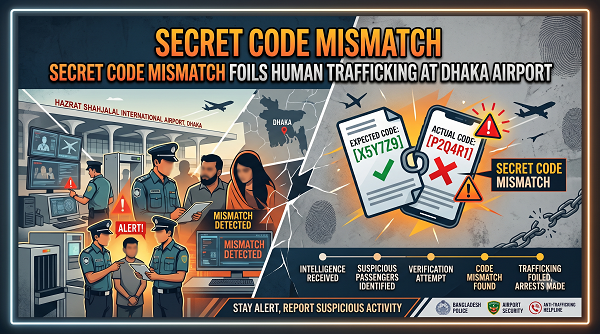


A major human trafficking attempt to send 76 Bangladeshi nationals to Malaysia on tourist visas was foiled at Hazrat Shahjalal International Airport after a secret code used by the trafficking syndicate failed to match, airport sources said.

The passengers were scheduled to travel to Malaysia on Biman Bangladesh Airlines flight BG-386. However, discrepancies were found in their passport and visa information, preventing their departure. Of the 76 passengers stopped, 15 were formally offloaded after irregularities were detected during final verification.
The incident has exposed renewed activities of a suspected human trafficking network operating through Dhaka airport. Several intelligence agencies have started investigating the incident, with allegations emerging against Civil Aviation Authority of Bangladesh (CAAB) Aerodrome Operator Abdul Bari Molla for his alleged involvement.
According to airport sources, members of the trafficking syndicate allegedly used secret codes to coordinate with insiders and help passengers pass through immigration and security procedures. The plan reportedly collapsed when some passengers failed to provide the correct code at the boarding gate.
Five passengers were reportedly stopped at the boarding gate after they failed to provide the required secret signal. Once the syndicate members realized the operation had been exposed, several other passengers allegedly attempted to leave the airport in panic. Intelligence personnel monitoring the situation intercepted some of them.
Meanwhile, other members of the group waiting at check-in counters reportedly left the airport without collecting boarding passes after receiving information about the arrests. The incident created a tense situation at the airport and brought renewed attention to the alleged “body contract” based human trafficking network.
Hazrat Shahjalal International Airport Executive Director SM Ragib Samad said authorities were taking the matter seriously.
“We are investigating the incident thoroughly. Intelligence agencies working at the airport are trying to identify those involved and uncover the entire network,” he said.
Sources said intelligence officials had prior information that a large group would attempt to travel to Malaysia through a “body contract” arrangement. Surveillance was increased on passengers of the flight, and suspicious documents were re-examined, revealing inconsistencies.
The Biman Bangladesh Airlines Boeing 787 Dreamliner departed for Malaysia at around 8:35pm on Saturday. Although 245 passengers were scheduled to travel, 76 passengers did not board the aircraft. Among them, 15 were offloaded after their passport and visa details were found inconsistent.
All the passengers were travelling on tourist visas. However, investigators suspect that they were being sent through a travel agency with plans to stay illegally in Malaysia after arrival.
According to sources, the arrangement was allegedly made through a Dhaka-based travel agent named Harun. Since Malaysia’s recruitment of foreign workers through work permits has remained restricted, the syndicate allegedly attempted to send workers using tourist visas.
Investigators found that the alleged secret code used by the group was “Shapla”. The trafficking plan collapsed when some passengers failed to mention the code during the final boarding process.
Questions have also been raised over how passengers with allegedly problematic documents managed to pass through check-in counters and immigration clearance before reaching the boarding gate.
Sources said the passengers’ visas were accepted as “verified” at the check-in stage, and they were later cleared by immigration. However, during the final boarding gate inspection, several visas were identified as fake or invalid, leading to the exposure of the suspected trafficking network.
Officials familiar with the investigation said “body contract” trafficking groups operate by collecting money from individuals and arranging their overseas travel using fake or defective documents. Allegations have previously surfaced about the involvement of some airport employees and external brokers in facilitating such activities.
Recent intelligence reports have reportedly identified possible involvement of several airport personnel. Authorities are now investigating who helped the passengers cross immigration and which travel agencies or syndicates were behind the operation.
Intelligence sources said trafficking groups allegedly use various codes such as “Uttara”, “Sylhet”, “Chashma”, “Ekashi”, “Nodi”, “Shapla” and “Biman” to coordinate passenger movements through specific counters, immigration clearance and exit gates.
Over the past six months, 22,372 Bangladeshi nationals have reportedly been deported from different countries, averaging more than 3,700 returnees per month. A significant number of them were allegedly victims of trafficking networks that sent people abroad using fraudulent documents.
A recent intelligence report recommended disciplinary action against 11 individuals and further investigation into nine others over alleged involvement in human trafficking. The list reportedly includes several police personnel as well as CAAB Aerodrome Operator Abdul Bari Molla.
Earlier on March 30, Abdul Bari Molla was arrested during a crackdown on a suspected human trafficking network. Investigators alleged that he was one of the key figures behind a “body contract” trafficking syndicate operating through the airport.
Aviation expert Kazi Wahidul Alam said weaknesses in immigration and airport security systems must be addressed immediately.
“If such loopholes are not removed quickly, international monitoring agencies may increase scrutiny. This could damage the credibility of Bangladesh’s airports and reduce confidence among foreign airlines and international partners,” he said.
CAAB Member (Administration) Additional Secretary SM Lablu Rahman said strict action would be taken against Bari Molla as his name appeared in the investigation report.
“Since his name has emerged in the investigation, necessary disciplinary measures will be taken,” he said.