


UN Climate Change Executive Secretary Simon Stiell has called for a faster global transition to clean energy, describing it as a cornerstone of national security, economic resilience, and long-term peace.

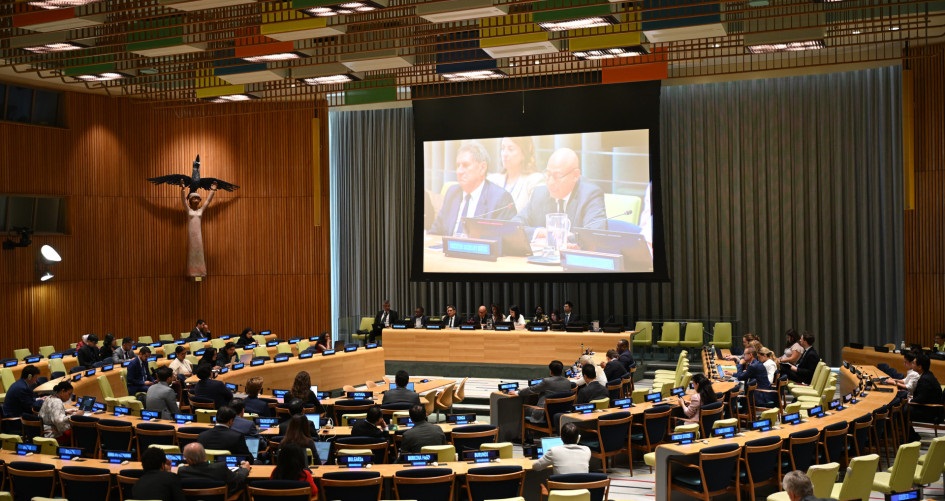
Speaking at the UN General Assembly Informal Interactive Dialogue on “Accelerating the Global Energy Transition: Advancing Renewables and Mobilizing Investment” on Friday, Stiell said recent global crises have demonstrated that renewable energy is no longer only a climate solution but also a strategic necessity.
“Faster energy transitions are core business for governments, and core to national security strategies,” Stiell said.
Drawing on observations from a recent visit to India, he noted that business leaders increasingly view clean energy as a driver of economic growth, job creation, and energy security. He argued that the ongoing fossil fuel cost crisis, worsened by global conflicts, has highlighted the vulnerability of countries dependent on coal, oil, and gas.
Stiell pointed to countries such as Spain and Pakistan, saying their investments in renewable energy have helped shield them from some of the worst impacts of rising fossil fuel prices.
He also warned that conflict, economic downturns, and climate-related disasters are combining to threaten global food security. Climate change, intensified by El Niño, along with fertilizer shortages, is putting harvests at risk and driving up food prices, leaving millions of vulnerable people facing increased hunger and scarcity.
“A world addicted to coal, oil and gas is a world of economic uncertainty, unnecessary costs, and conflict,” he said, citing projections that Southeast Asia’s energy import bill will reach $160 billion this year.
The UN climate chief stressed that accelerating renewable energy deployment, electrification, and energy efficiency together can strengthen economies, reduce greenhouse gas emissions, and contribute to lasting peace by supporting sustainable development.
Referring to commitments made at COP28, Stiell reminded countries of their pledge to transition away from fossil fuels while tripling global renewable energy capacity and doubling energy efficiency by 2030.
He also welcomed the incoming COP31 Presidency of Türkiye, which has proposed Action Agenda targets, including achieving a global electrification rate of 35 percent by 2035.
Stiell urged major technology companies, particularly those operating artificial intelligence data centers, to power all facilities with renewable energy by 2030, in line with the UN Secretary-General’s call.
Highlighting the critical role of climate finance, he said developed countries must fulfill their commitments to triple adaptation finance and deliver $300 billion annually by 2035, while working toward mobilizing $1.3 trillion per year for climate action.
He also called on multilateral development banks to expand concessional financing, guarantees, and policy-based lending to help developing countries strengthen electricity grids, improve regulatory frameworks, and develop bankable clean energy projects.
Concluding his address, Stiell urged governments and the United Nations to integrate climate action across development, security, and economic policies, emphasizing that investing in renewable energy and resilience serves the interests of every nation.
“Doubling down on renewables and resilience is in every country’s interests. And action now is the basis of long-term peace and security around the world,” he said.