


The United Nations High Commissioner for Refugees (UNHCR) and its humanitarian partners have appealed to the international community not to forget the plight of more than 1.2 million Rohingya refugees living in Bangladesh, as the world approaches the ninth anniversary of the mass displacement from Myanmar.

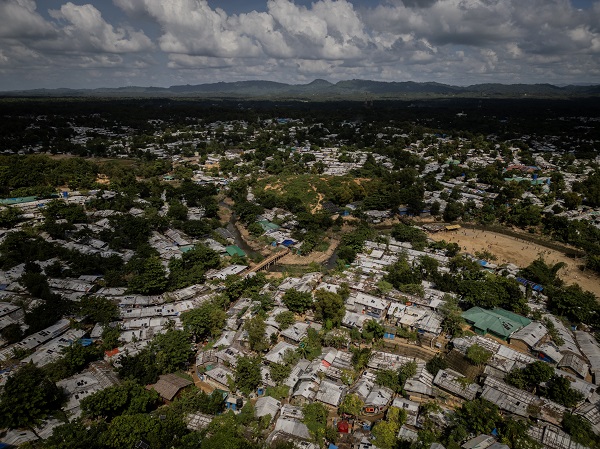
Speaking at a press briefing in Geneva on Tuesday, UNHCR spokesperson Babar Baloch said the Rohingya refugee crisis remains one of the world’s largest and most protracted humanitarian emergencies, with the majority of refugees residing in camps in Cox’s Bazar.
Bangladesh has provided protection to successive waves of Rohingya refugees since the late 1970s. The largest influx occurred in August 2017, when around 750,000 Rohingya fled violence and persecution in Myanmar’s Rakhine State and crossed into Bangladesh.
UNHCR said the generous support of the Government of Bangladesh and the international community has been vital in ensuring access to food, shelter, healthcare, education and protection services for refugees. However, growing global instability and competing humanitarian crises have put increasing pressure on available resources.
Last month, the United Nations and its partners, in coordination with the Government of Bangladesh, launched a humanitarian appeal seeking US$710.5 million to address the most urgent needs of Rohingya refugees and host communities. Despite rising humanitarian demands, the appeal is 26 per cent lower than last year’s funding request due to prioritization measures.
According to UNHCR, humanitarian assistance since 2017 has enabled significant progress in refugee welfare, including improvements in education, health services and protection mechanisms. Nevertheless, substantial needs remain, particularly for vulnerable groups such as women, children, persons with disabilities and older people.
The agency also highlighted the challenges facing approximately 150,000 new arrivals who have fled renewed violence in Myanmar’s Rakhine State since early 2024.
With ongoing conflict, persecution and insecurity in Myanmar, prospects for the voluntary repatriation of Rohingya refugees have become increasingly uncertain. As a result, many refugees are undertaking dangerous sea journeys in search of safety and opportunities elsewhere in the region.
UNHCR noted that 2025 was the deadliest year on record for such voyages, with nearly 900 Rohingya refugees reported dead or missing in the Andaman Sea and the Bay of Bengal.
The humanitarian appeal currently stands at around 60 per cent funded. UNHCR warned that maintaining only minimum levels of assistance could lead to more severe humanitarian consequences and increase long-term costs.
The agency stressed that greater investment in refugee resilience and self-reliance is essential to preserving dignity and hope while reducing dependence on aid.
UNHCR called on the international community to continue supporting Rohingya refugees and their host communities until conditions in Myanmar allow for a voluntary, safe and dignified return.