
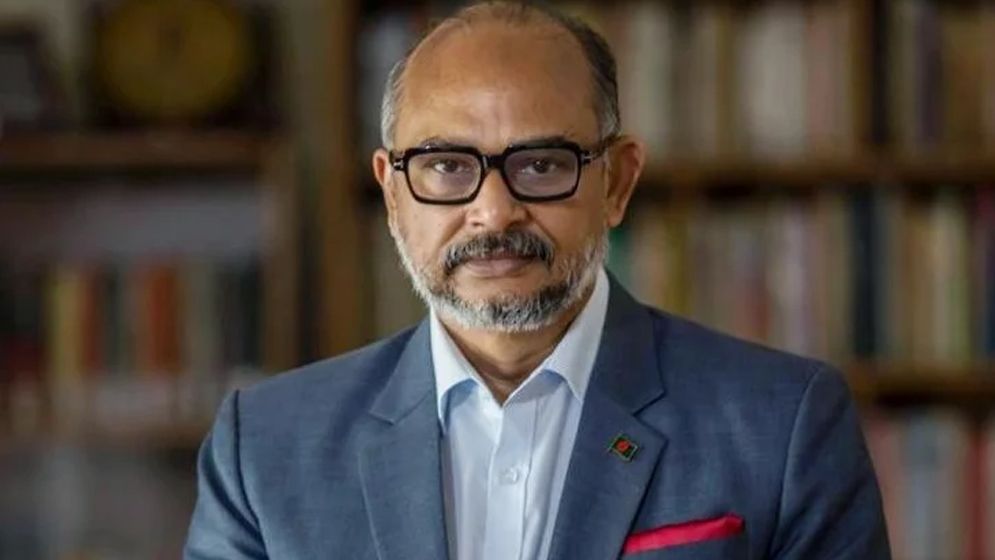


The International Monetary Fund (IMF), the World Bank and other development partners will support Bangladesh’s reform initiatives based on the country’s own priorities and reform strategies, said Dr. Rashed Al Mahmud Titumir, Adviser to the Prime Minister on Finance and Planning.

He said international development partners were, for the first time, explicitly highlighting their willingness to support reforms based on Bangladesh’s own priorities, creating an opportunity for the country to advance reforms in line with its own plans.
He made the remarks while speaking to journalists on Thursday on the sidelines of the annual meetings of the IMF and the World Bank Group in Bangkok.
Titumir said the support extended to Bangladesh was not limited to the IMF and the World Bank. Other multilateral institutions, including the Asian Development Bank (ADB) and the Islamic Development Bank, as well as relevant agencies from China and the United States, were also extending cooperation in line with Bangladesh’s priorities.
He said the country’s own strategies and priorities were receiving greater attention in discussions with development partners.
Asked whether IMF loan conditions could pose obstacles to securing financial assistance, Titumir said the process would move forward in accordance with established procedures. The government was trying to implement each step quickly and effectively, and remained optimistic about taking prompt and effective measures in this regard.
On the IMF’s growth and inflation projections, he said the forecasts should also be viewed from the perspective of the potential impact on the economy if reform measures were not implemented. Differences among projections made by international organisations were normal, he added.
Reviewing past data, Titumir said the IMF’s growth projections had generally tended to be somewhat conservative.
He noted that the IMF’s Article IV mission report had projected Bangladesh’s economic growth at 4.7 per cent. However, the government remained optimistic about achieving its budgetary growth target of 6.5 per cent.
Titumir said the government’s election manifesto had already outlined its reform priorities, which would subsequently be reflected in the country’s five-year economic strategy. The government believed that implementing the planned reforms would strengthen the economy’s capacity.
On inflation, the adviser said several factors were contributing to the current situation. The impact of developments in the Middle East, alongside persistent inflation inherited from previous years, had made the situation more complex.
Reducing the cost of living and ensuring protection for vulnerable households were therefore among the government’s key priorities, he said.
Titumir acknowledged that social safety net programmes had suffered from weaknesses in beneficiary selection in the past. Many people who should have received assistance were excluded, while others who were not eligible had benefited. The fragmented nature of these programmes had also prevented them from delivering the expected results.
He said a World Bank report had highlighted rising poverty in recent years amid shortcomings in the effectiveness of social protection systems.
To address these challenges, the government was introducing initiatives such as Family Cards and Farmers’ Cards. These programmes would help identify beneficiaries through scientific methods and ensure that assistance reached those who genuinely needed it, he said.
The adviser also stressed the importance of developing digital public infrastructure to improve the effectiveness of social protection programmes.
Development partners had responded positively to the government’s target of allocating 5 per cent of gross domestic product (GDP) to the social sector and its plan to increase spending on healthcare, he said. Discussions had also covered expanding support for these sectors in line with Bangladesh’s priorities.
Titumir said the government aimed to raise tax collection to 10 per cent of GDP by 2030. Restoring discipline in the banking sector, protecting depositors’ interests and ensuring accountability across the financial sector were also key priorities.
He said the government had taken steps to return deposits to customers of Sammilito Islami Bank to safeguard depositors’ money. Initiatives would also be taken to improve transparency in banks’ financial statements and balance sheets and reform the necessary legal frameworks.
Referring to past financial irregularities, Titumir said ordinary Bangladeshis were bearing a substantial cost as a result of the plundering of funds from banks and other sectors.
According to him, around $40 billion had been looted from the banking sector. He stressed that the money belonged to the people and that those responsible for financial irregularities and embezzlement must be held accountable.
He said accountability must be ensured regardless of whether those involved in the alleged financial crimes were residing in Bangladesh or abroad.
A coordinated effort was needed to address non-performing loans and other financial irregularities, he added. Holding accountable not only those who looted money but also those who facilitated such activities would help reduce the likelihood of similar offences in the future, he said.
The annual meetings of the IMF and the World Bank Group began in Bangkok, the capital of Thailand, on October 12 and will continue until October 18. The meetings are discussing a range of key issues, including the global economic outlook, financial stability, poverty reduction and inclusive growth.