
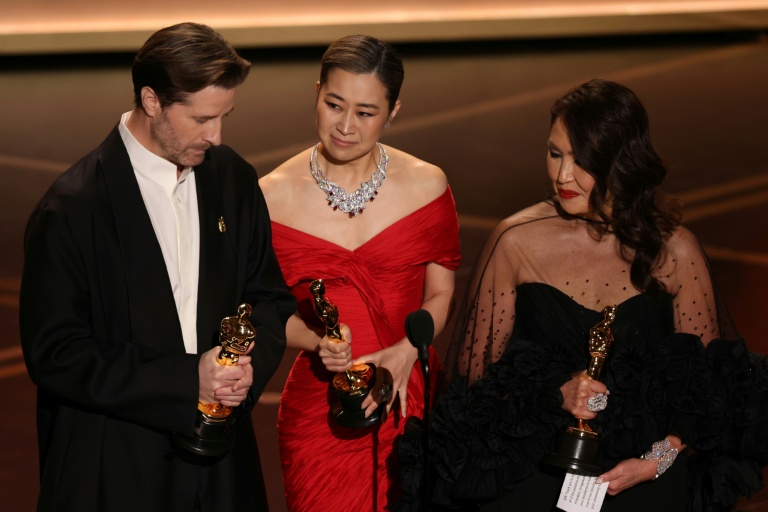


The fantasy flick, a clash of good versus evil drawing heavily on Korean mythology and driven by a pulsing K-pop soundtrack, won the Academy Awards for best animated feature and best original song at Sunday’s ceremony in Hollywood.
It had already built a massive global following, becoming the most-watched original film of all time on streaming giant Netflix and hoovering up accolades including a Grammy for lead track “Golden”, the first such win for a K-pop song.
South Koreans hailed their latest cultural product to infect the world with “K-syndrome” — the irresistible surrender to the country’s movies, music, books, fashion and cuisine.
“So the so-called K-syndrome is now going into animated film as well,” wrote one viewer using the YouTube handle Kim Chang-soo, echoing widespread pride online.
Much of the domestic reaction centred on Korean-Canadian co-director Maggie Kang’s emotional acceptance speech, with the Seoul-born filmmaker dedicating the prizes to her motherland.
“The culture ministry should at least award her a medal for that speech!” one internet user commented on a news portal.
A headline in the Hankook Ilbo newspaper quoted Kang’s address directly, blaring: “This is for Korea and Koreans everywhere”.
News channel YTN lavished praise on Kang’s “heartfelt message to Korea”, referring to the movie by its affectionate shorthand “Kedehun”, a combination of the title’s first three syllables.
The film’s dual Oscars triumph caps a remarkable run since its June release on Netflix.
On the back of its blockbuster-style debut, the platform also released a limited “sing-along” edition in North American cinemas for one weekend, which topped the box-office chart.
Netflix has already announced a sequel, though no release date has been set.
The film’s Grammy win for “Golden” was widely viewed as a breakthrough moment for K-pop, marking the genre’s first victory at an awards show that had eluded the industry despite its global popularity.
AFP