
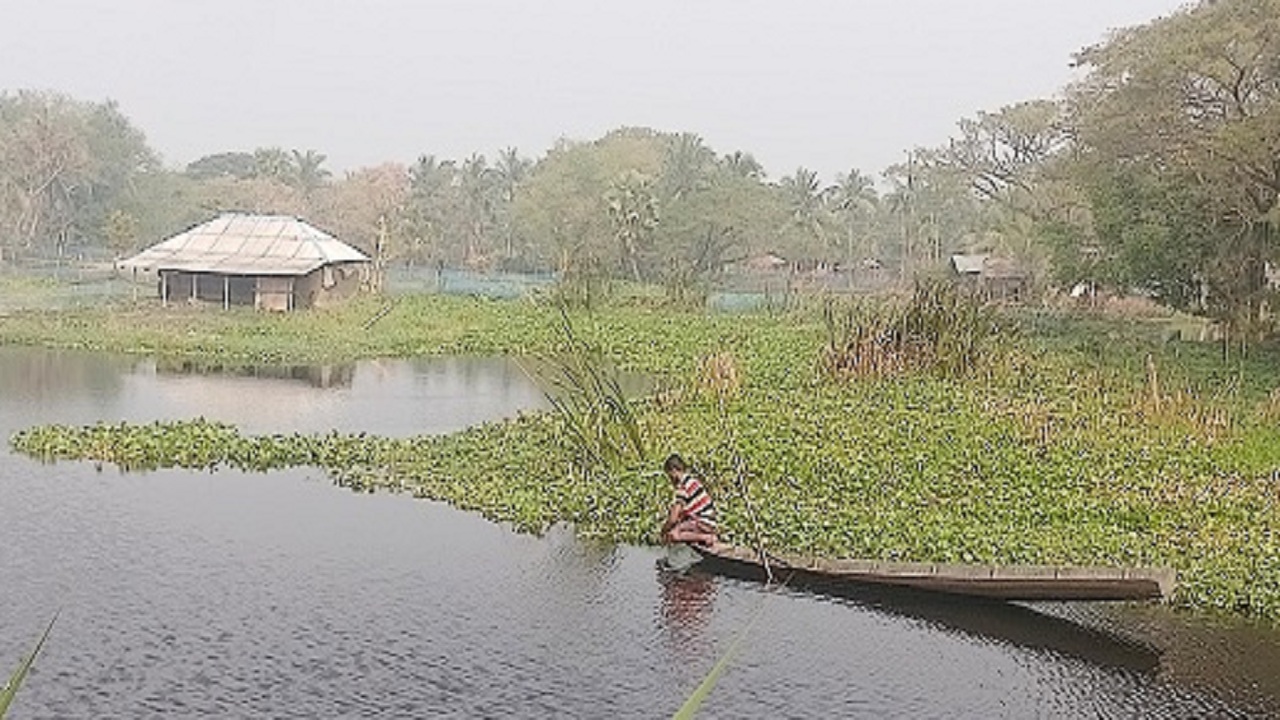


In Khulna, natural disasters such as Cyclone Sidr, Aila and Amphan are no longer the only threats to agriculture. Farmers in the district are now increasingly battling year-round waterlogging, which, alongside heatwaves and cold spells, is severely affecting the production of Boro, Aman and vegetable crops.

According to the Department of Agricultural Extension (DAE), nearly 10,000 hectares of farmland across eight upazilas in Khulna suffer from waterlogging every year, causing crop losses estimated at around Tk 100 crore annually.
A recent DAE survey conducted in February found that 1,178 hectares of land remain permanently waterlogged, while excessive rainfall inundates another 8,586 hectares. The affected areas include Rupsa, Batiaghata, Dighalia, Phultala, Dumuria, Terokhada, Paikgachha, Koyra and parts of Khulna city including Labanchara.
At the beginning of the current Boro season, severe cold waves dried up seedbeds in Dumuria, Phultala and Terokhada. Later, sudden rainfall at the end of April and early May caused extensive damage to Boro paddy fields and watermelon cultivation in Dakop. Even moderate rainfall submerged croplands in several areas.
Agriculture officials identified at least 15 reasons behind the worsening waterlogging situation. Key causes include reduced water flow in rivers and canals, unplanned shrimp farming enclosures, encroachment and filling of canals, poor management of sluice gates, blocked drainage systems and unplanned settlements in low-lying areas.
In Rupsa upazila, reduced water flow in the Atharabaki River has worsened water stagnation in nearby agricultural lands. In Dighalia, tidal water combined with heavy rainfall creates prolonged flooding. In Batiaghata, delayed drainage through sluice gates leaves croplands submerged for extended periods. Meanwhile, in Terokhada’s Bhutiar Beel, lack of canal dredging for years has created permanent waterlogging on nearly 100 hectares of land.
According to the Bangladesh Water Development Board, 12 rivers in Khulna are now under threat due to loss of navigability. These include the Sholmari, Hamkura, Hari, Bhadra, Upper Salta, Chitra, Atharabaki, Kopotakkho, Shakbaria and Moyur rivers. During the monsoon season, reduced river depth prevents proper drainage of surrounding areas, intensifying waterlogging.
Additional Deputy Director of the DAE in Khulna, Subir Kumar Biswas, said unplanned housing, shrimp enclosures, filled-up canals and low-lying terrain are among the major factors behind the crisis. He noted that canal excavation work has already started in Beel Dakatia, an area long known for severe waterlogging in Dumuria and Phultala.
“Due to waterlogging, vegetable cultivation in low-lying lands of Dumuria and Phultala is becoming increasingly difficult. Early rainfall often destroys vegetable crops in southern Dumuria,” he said.
He also mentioned that repeated climate-related disasters, rising agricultural input costs and poor market prices are discouraging farmers in Dakop from cultivating watermelon.
Terokhada Upazila Agriculture Officer Shiuli Majumdar said low-lying areas in Sachiadah, Chagladah and Terokhada unions remain waterlogged because rainwater cannot drain quickly.
“Re-excavation of canals and proper operation of sluice gates can significantly reduce permanent waterlogging and increase cultivable land,” she added.
Local farmers urged the government to take immediate steps to dredge rivers and canals, modernize drainage systems and ensure planned water management to protect Khulna’s agriculture from further decline.