
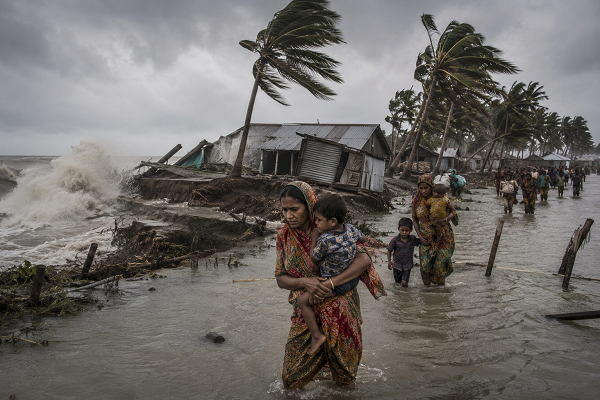


The impacts of climate change are now most severely visible in the coastal regions of Bangladesh. Areas such as Khulna, Satkhira, Bagerhat, Patuakhali, and Bhola are experiencing rising salinity, river erosion, cyclones, scarcity of safe drinking water, and agricultural collapse, pushing people’s lives into extreme vulnerability. Experts fear that by 2040, nearly 40 million people in the country could be displaced due to climate change.

Due to excessive carbon emissions from industrialized nations, global temperatures are rising. As a result, polar ice is melting rapidly and sea levels are increasing. This has led to widespread saltwater intrusion in the southern coastal belt of Bangladesh. Studies show that between 1995 and 2015, agricultural land in three southern districts decreased by nearly 80 percent. The shortage of safe drinking water, declining agricultural production, and loss of livelihoods are forcing many people to migrate to urban areas.
Disaster and management experts note that reduced freshwater flow in rivers—partly due to structures such as the Farakka Barrage—has further increased salinity in coastal areas. This is expected to create a severe humanitarian crisis in the future. Climate-induced displacement is steadily increasing, and major cities like Dhaka are already experiencing growing pressure from climate migrants.
Meanwhile, extreme heat and irregular weather patterns are severely affecting agriculture and livestock. Farmers’ irrigation costs have increased several times. Previously, two rounds of irrigation were sufficient for a crop field, but now it often requires five to nine rounds. Heat stress is causing deaths in dairy and poultry farms, while fruit, vegetables, and crop production are declining, increasing the risk of food insecurity and inflation.
Women and children are among the most affected groups. In coastal areas, cyclones, river erosion, and salinity are forcing many families into destitution. Children from migrant families are dropping out of school and engaging in child labor. Economic hardship is also pushing many families to arrange early marriages for adolescent girls. Research indicates that a significant proportion of child marriages in Bangladesh occur in coastal regions.
The shortage of safe drinking water has reached alarming levels. In many areas of Satkhira, Khulna, and Bagerhat, salinity in water has crossed dangerous thresholds. People are forced to consume saline water, leading to various health problems among children and women. Long-term consumption of saline water increases risks of hypertension, kidney disease, and complications during pregnancy.
According to UNICEF, nearly 20 million children in Bangladesh are exposed to climate risks. Among them, around 12 million live in river erosion-prone areas. About 4.5 million children are exposed to cyclones, and nearly 3 million are affected by drought conditions. Climate-related disasters are severely impacting children’s nutrition, education, health, and mental development.
International studies indicate that over 1.5 million people were internally displaced in Bangladesh due to natural disasters in the past year alone. Over the last two decades, the country has faced more than 185 natural disasters. Bangladesh ranks seventh among the most climate-vulnerable countries in the world.
Climate change is not only damaging the environment but also disrupting the entire social structure. Poverty is increasing, child labor is rising, malnutrition is worsening, and mental health risks are growing. Many families in coastal regions are now living in inhumane conditions in urban slums, along railway tracks, and on embankments.
Experts stress that urgent climate adaptation and long-term planning are essential to address these challenges. Strengthening coastal embankments, ensuring access to safe drinking water, modernizing agriculture, protecting women and children, and global efforts to reduce carbon emissions are necessary to secure a safe future for the next generation. For vulnerable countries like Bangladesh, this is not only an environmental issue but a struggle for survival.