
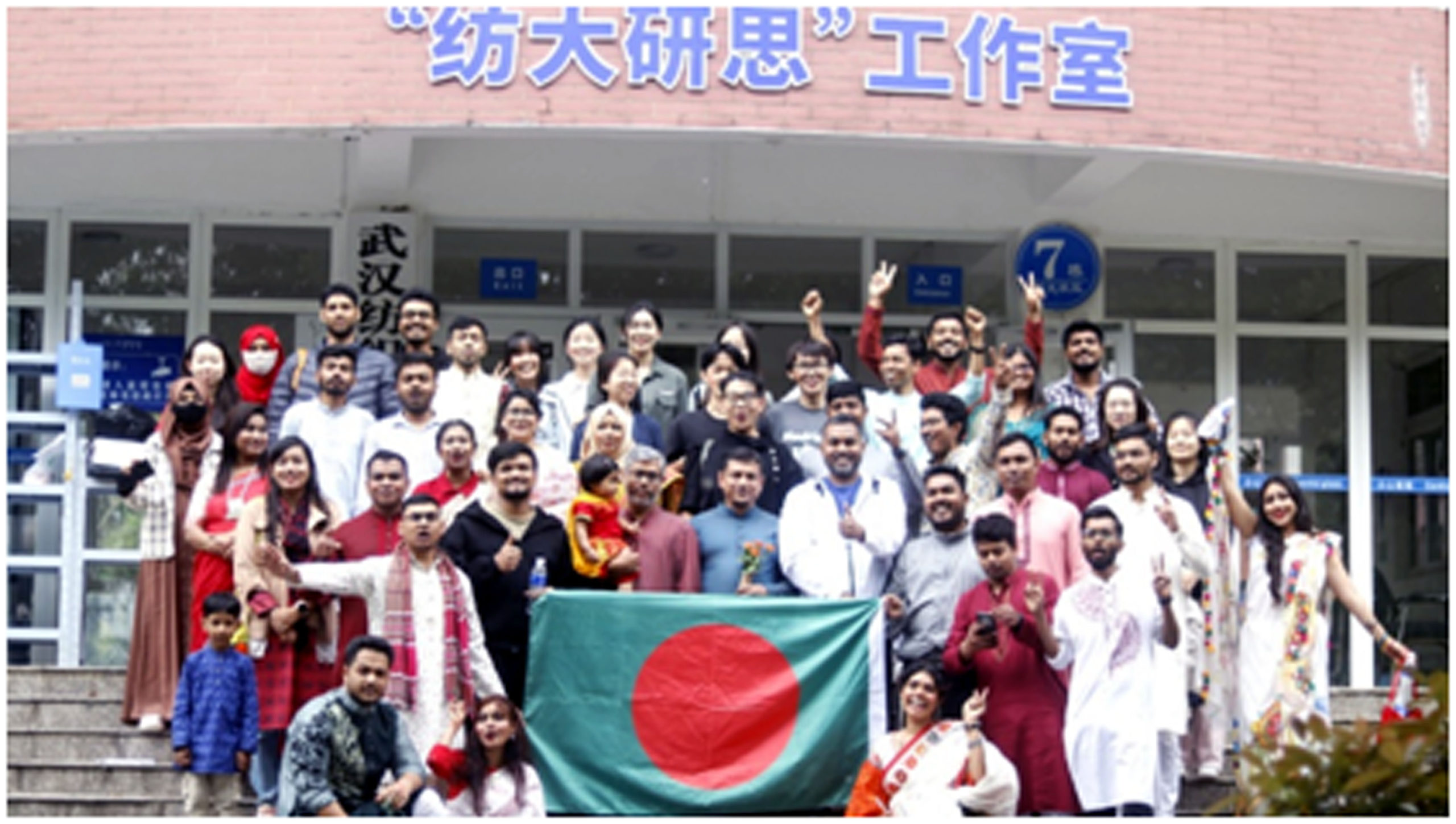


The students of Bangladesh traveled far to China for their studies and within the walls of Wuhan Textile University in China. The Bangladeshi student community came together to celebrate PohelaBoishakh 1433, the Bengali New Year, transforming a foreign campus into a colorful fest of tradition, joy, and cultural exchange.

What unfolded was more than just a celebration that it was a heartfelt cultural dialogue. With participation from students representing nine different countries, the event became a good platform where heritage met curiosity, and tradition met global appreciation. Around 80Bangladeshi attended, including 35 international students from countries such as India, Pakistan, Nepal, Sri Lanka, Indonesia, and Ivory Coast.
Opening the Cultural Gateway
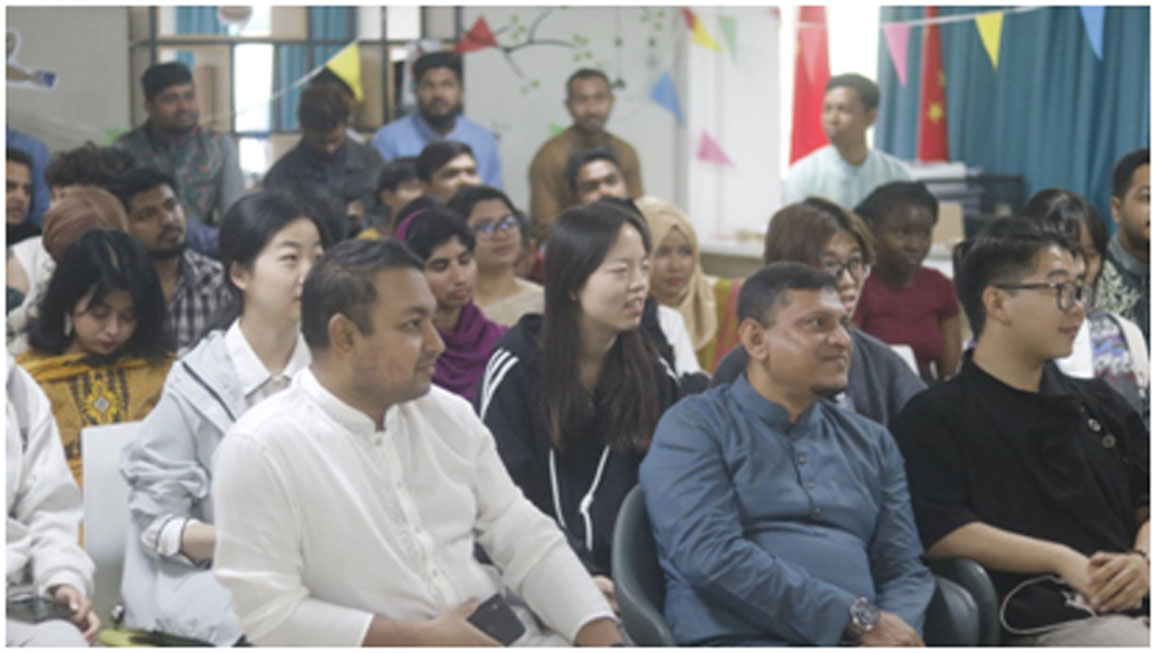
The program began with an engaging presentation introducing Bangladesh is in rich culture, traditions, and the historical roots of PohelaBoishakh. This thoughtful set the tone for what would become an immersive cultural experience.Soon after, the stage came alive.
Students performed traditional songs and dances, their movements and melodies carrying the rhythm of Bangladesh across borders. A trio of performers captivated the audience with a graceful dance performance, while others enriched the atmosphere with soulful songs accompanied by the harmonium.
Tradition Meets Participation
The celebration wasn’t limited to performances,it invited participation.
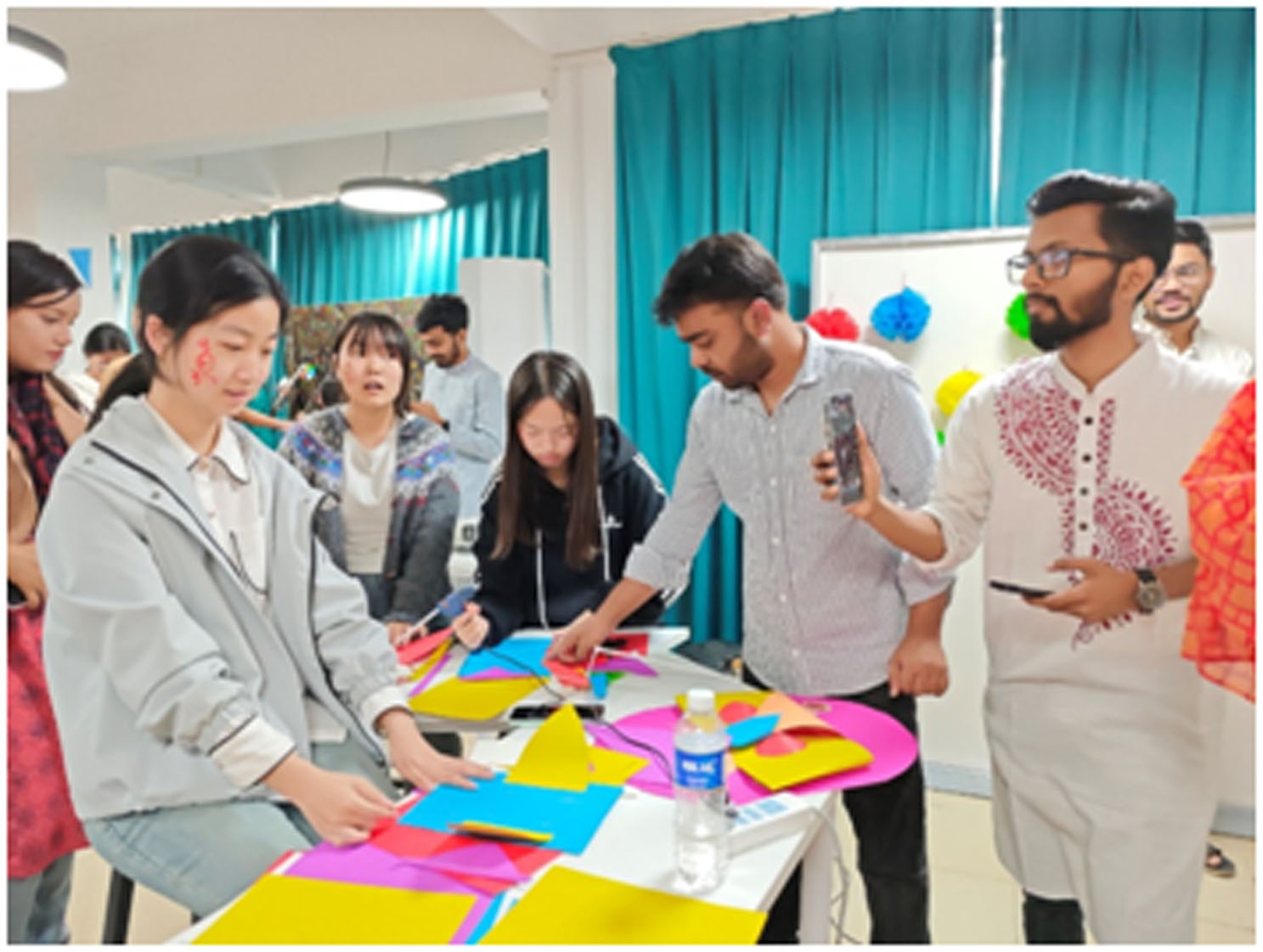
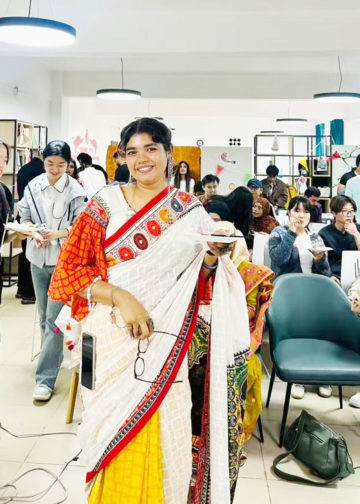
One of the most heartwarming moments came when a Pakistani student embraced Bengali culture by wearing a saree in traditional style, complete with festive face art inspired by Pohela Boishakh. Meanwhile, Chinese students enthusiastically joined a mask-making workshop, guided step-by-step by a fellow student name Ananda Sarker, learning not just technique, but the cultural symbolism behind each design.Colorful paper decorations filled the multipurpose hall full of radiating warmth and festivity. For a fleeting moment, Wuhan felt like Dhaka—alive with color, laughter, and connection.
Games, Laughter, and Shared Joy
The event seamlessly blended tradition with fun. Activities such as character play, chair games, and “Ganer Koli” brought waves of laughter and interaction. The origami competition added a cross-cultural twist, with winners emerging from China and Pakistan—an elegant symbol of unity through creativity.
A Feast of Heritage
No celebration of PohelaBoishakh is complete without its traditional cusines treasuresand this event delivered generously.Guests were treated to a rich spread of traditional Bangladeshi dishes, including:Panta Bhat (fermented rice), Fish fry, Various mashed delicacies (Alu, Kochu, Shutki, and Spiced Bhorta), Fried eggplant, Traditional sweets like Muwa and Til-er Khaja, Street favorites like Fuska. For many international students, it was their first taste of Bangladeshi cuisineand judging by their experience.
AnDay to Remember
The presence of two Chinese professors from Wuhan Textile University, along with four Bangladeshi professors from different universities in Wuhan, added an academic and diplomatic warmth to the event.
As the day drew to a close, one thing became clear: this was not just a student get together it was a bridge. A bridge between cultures, between people and identities.
In that shared space of music, food, and laughter, the Bangladeshi student community didn’t just celebrate a festival, they carried a piece of home across continents and placed it gently into the hearts of others.And for one beautiful day in Wuhan, Bangladesh wasn’t far away at all.
Organised by Rodela Zaman Mim